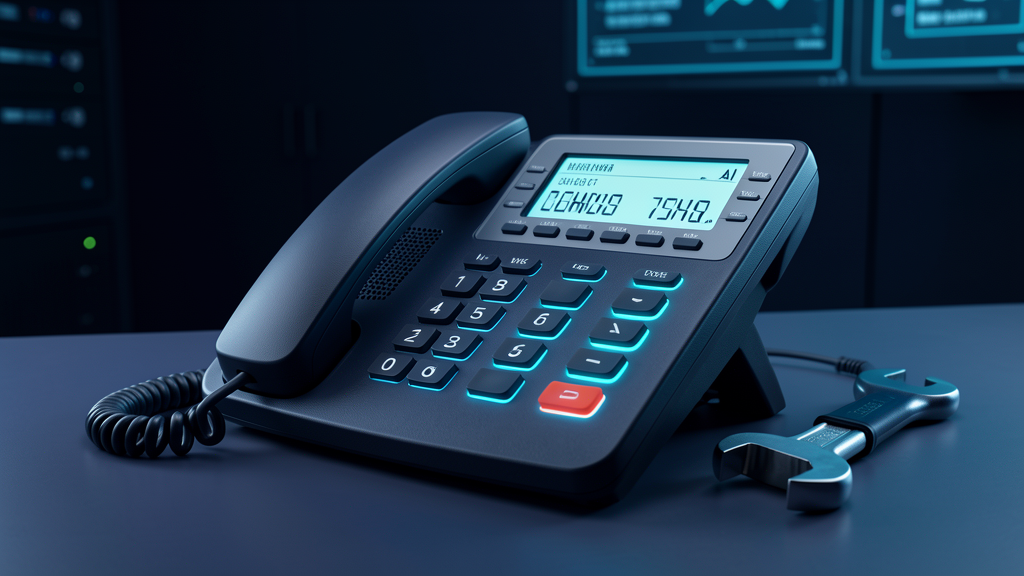
You see the monthly invoice from your legacy carrier and think, "At least it's predictable." That predictability is lying to you. The real cost of maintaining POTS lines, aging PBX hardware, and copper infrastructure in 2026 isn't on that bill — it's buried in places most organizations never look.
Let's pull back the curtain on what those systems are actually costing you.
The Invoice Is the Tip of the Iceberg
A single POTS line typically runs $45–$85 per month depending on your market and volume. For a 20-site property management firm running 3–5 analog lines per location, that's $2,700–$8,500 a month just in line charges.
But that's the visible cost. Here's what the invoice doesn't show you.
Cost #1: The Truck Roll Tax
When a legacy circuit goes down — and they go down more often than you think — the repair process hasn't changed much since the 1990s. You call the carrier. They dispatch a truck. A technician shows up sometime between 8am and 4pm, checks the wiring closet, and maybe blames the inside wiring.
Every truck roll costs your business in lost productivity. If your elevator phone is down or your fire alarm communicator can't reach the monitoring center, you're also looking at compliance exposure. That's not a line item on anyone's invoice, but it'll show up on your risk assessment.
Cost #2: The Parts Problem
PBX hardware that was installed during the second Bush administration doesn't have a thriving spare parts market in 2026. When a line card fails, you're either paying inflated prices for refurbished equipment on the secondary market or paying a technician to Frankenstein a fix with whatever's available.
We've seen clients spend $3,000 replacing a single card in a system that was originally installed for $5,000 total. At some point, replacement becomes cheaper than repair — and that point arrives faster than most finance departments realize.
Cost #3: The Opportunity Cost of Analog
Your legacy phone system can't integrate with your CRM. It can't route calls based on customer data. It can't transcribe voicemails, qualify leads, or give you analytics on call patterns.
Every missed integration is a missed revenue opportunity. If your competitors are using AI-powered phone systems that qualify and route leads automatically while your team is still manually checking voicemail, the cost isn't just operational — it's competitive.
Cost #4: The Rate Hike Reality
AT&T, Verizon, and Lumen are actively trying to sunset copper. Where they can't force a disconnection outright, they're raising rates — sometimes 20–30% year over year. The carriers want out of the copper business as badly as you want off POTS, but they're happy to collect premium pricing until you make the move.
If your telecom costs have been climbing faster than inflation, it's not your imagination. It's a deliberate strategy.
Cost #5: The Talent Drain
The technicians who really understand Nortel, Avaya Partner ACS, and Merlin Magix systems are retiring. The pool of qualified legacy PBX technicians shrinks every year, which means the ones who remain command higher rates and longer lead times.
When you're one of three clients in the metro area still running a specific legacy system, you're not a valued customer — you're captive revenue. And you're paying accordingly.
What Modernization Actually Costs
Here's the part that surprises most organizations: modernization is usually cheaper than maintenance. A SIP trunking solution with hosted VoIP typically runs $15–$25 per channel per month. For that 20-site property management firm, the monthly telecom spend could drop from $5,000 to $1,500 — while adding features they've never had.
Cellular-based POTS replacement solutions for fire alarms and elevator phones run $20–$40 per unit per month, often less than the analog lines they replace, with better reliability and remote monitoring built in.
The 90-Day ROI Window
Most organizations we work with see a full return on their telecom modernization investment within 60–90 days. After that, the savings are pure margin improvement — month after month, year after year.
The question isn't whether you can afford to modernize. It's whether you can afford not to.
If you're tired of writing checks for systems that should've been retired a decade ago, let's talk. We'll audit your current telecom spend and show you exactly what modernization looks like for your specific setup — no obligation, no fluff.
About the author
Carter Dewey
Carter Dewey is CEO & Founder of TrustedNetworx, helping multi-site organizations navigate telecom modernization, POTS replacement, and AI-powered operations — translating complex infrastructure challenges into practical, phased migration roadmaps.