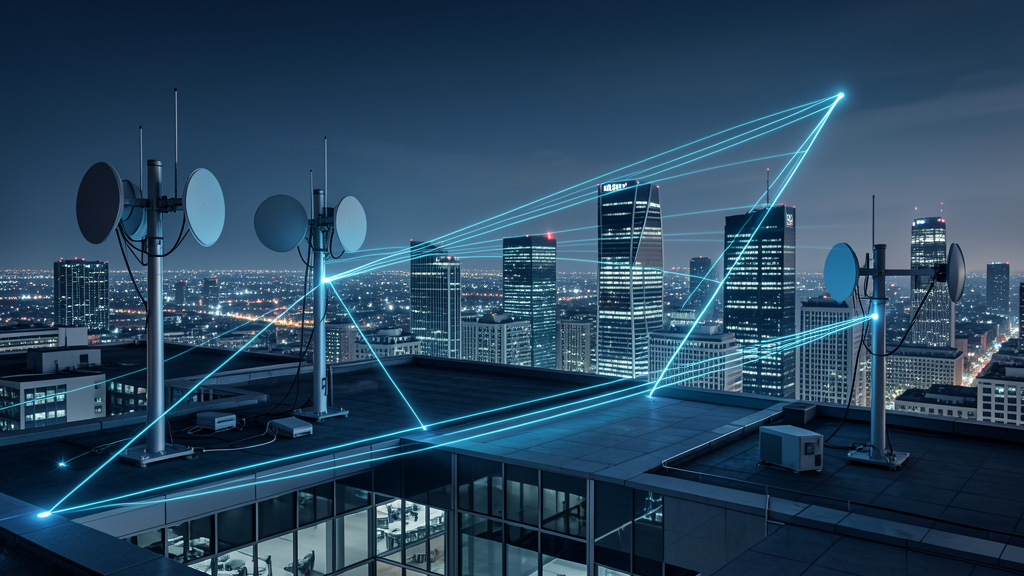
The Last Mile Problem Hasn't Gone Away — But the Solution Has Changed
For decades, the "last mile" was the hardest part of any business connectivity deployment. You could have a fiber backbone running down the highway, but getting that connection the final few thousand feet to your building meant digging trenches, navigating right-of-way agreements, and waiting months — sometimes longer.
T1 and PRI lines were the workaround. Reliable, yes. Fast by 1990s standards, sure. But in 2026, relying on copper for your primary business connectivity is like running your accounting on a DOS machine.
5G and LTE have changed the equation. And not just as a backup option.
Fixed Wireless Is Having Its Moment
Fixed wireless access (FWA) — using cellular networks to deliver business-grade internet to a fixed location — is growing faster than most people realize. Carriers like T-Mobile, Verizon, and AT&T are aggressively expanding their FWA offerings, and for good reason.
The numbers tell the story:
- Deployment speed: A fixed wireless connection can be live in days, not months. No trenching, no permits, no construction delays.
- Bandwidth that competes: 5G fixed wireless routinely delivers 100-300 Mbps, with some deployments hitting 1 Gbps. That's not "good enough as backup" territory — that's primary connection territory.
- Cost per megabit: In many markets, FWA undercuts traditional dedicated internet access by 30-50%.
For multi-site organizations — property management firms, retail chains, healthcare networks — the ability to bring a new location online in under a week instead of 90 days is a game-changer.
Where Cellular Makes Sense as Primary
Not every business should rip out their fiber and go all-cellular. But there are specific scenarios where 5G/LTE as primary connectivity is the smartest play:
1. Temporary or Pop-Up Locations
Construction trailers, seasonal retail, event venues — these don't need a 3-year fiber contract. A 5G router gets them online today and offline when they're done.
2. Multi-Site Rollouts
When you're opening 20 new locations this year, you can't wait for 20 separate fiber installs. Fixed wireless lets you standardize connectivity across every site from day one, then transition to fiber where it makes sense later.
3. Rural and Underserved Areas
Fiber isn't coming to every rural industrial park or agricultural facility. But 5G coverage is expanding into areas that traditional ISPs have ignored for decades.
4. Redundant Paths That Aren't Just Backup
The old model: fiber primary, LTE backup that sits idle 99.9% of the time. The new model: active-active SD-WAN across fiber and cellular, load-balancing traffic in real time. Your backup isn't collecting dust — it's earning its keep.
The Business Continuity Angle
Here's what most businesses get wrong about connectivity redundancy: they buy backup from the same carrier that provides their primary.
If a construction crew cuts a fiber line, it doesn't matter whether you have two circuits from the same provider — they're probably in the same trench.
Cellular as a redundant path solves this completely. It's physically diverse by definition. No shared infrastructure. No single point of failure.
And with 5G's lower latency, failover happens fast enough that VoIP calls don't drop and POS terminals don't time out.
What to Look for in a Cellular Connectivity Partner
Not all wireless solutions are created equal. If you're evaluating 5G/LTE for business connectivity, here's what matters:
- Carrier diversity: A solution that locks you into one carrier defeats the purpose. Look for providers that can aggregate multiple carrier networks.
- Static IP support: Many business applications require a fixed IP. Make sure your wireless solution supports it.
- SLAs that mean something: "Best effort" cellular is fine for a backup. If it's your primary, you need uptime commitments and a support path that doesn't end at "try turning it off and on again."
- Management and monitoring: You should see your wireless connections in the same dashboard as your wired ones. Separate management tools create blind spots.
- Installation that respects your business: Antenna placement, signal optimization, and proper grounding matter. This isn't plugging in a hotspot.
The Bottom Line
5G and LTE have graduated from "emergency backup" to "strategic connectivity asset." The businesses that recognize this now are the ones skipping the 90-day fiber install, opening locations faster, and building genuinely redundant networks that don't break the budget.
If your connectivity strategy still treats cellular as an afterthought, it's worth a fresh look.
Want to see what 5G fixed wireless would look like at your locations? Get in touch — we'll run a free coverage analysis and give you real numbers, not sales pitches.
About the author
Carter Dewey
Carter Dewey is CEO & Founder of TrustedNetworx, helping multi-site organizations navigate telecom modernization, POTS replacement, and AI-powered operations — translating complex infrastructure challenges into practical, phased migration roadmaps.