POTS IN A BOX® 90X1
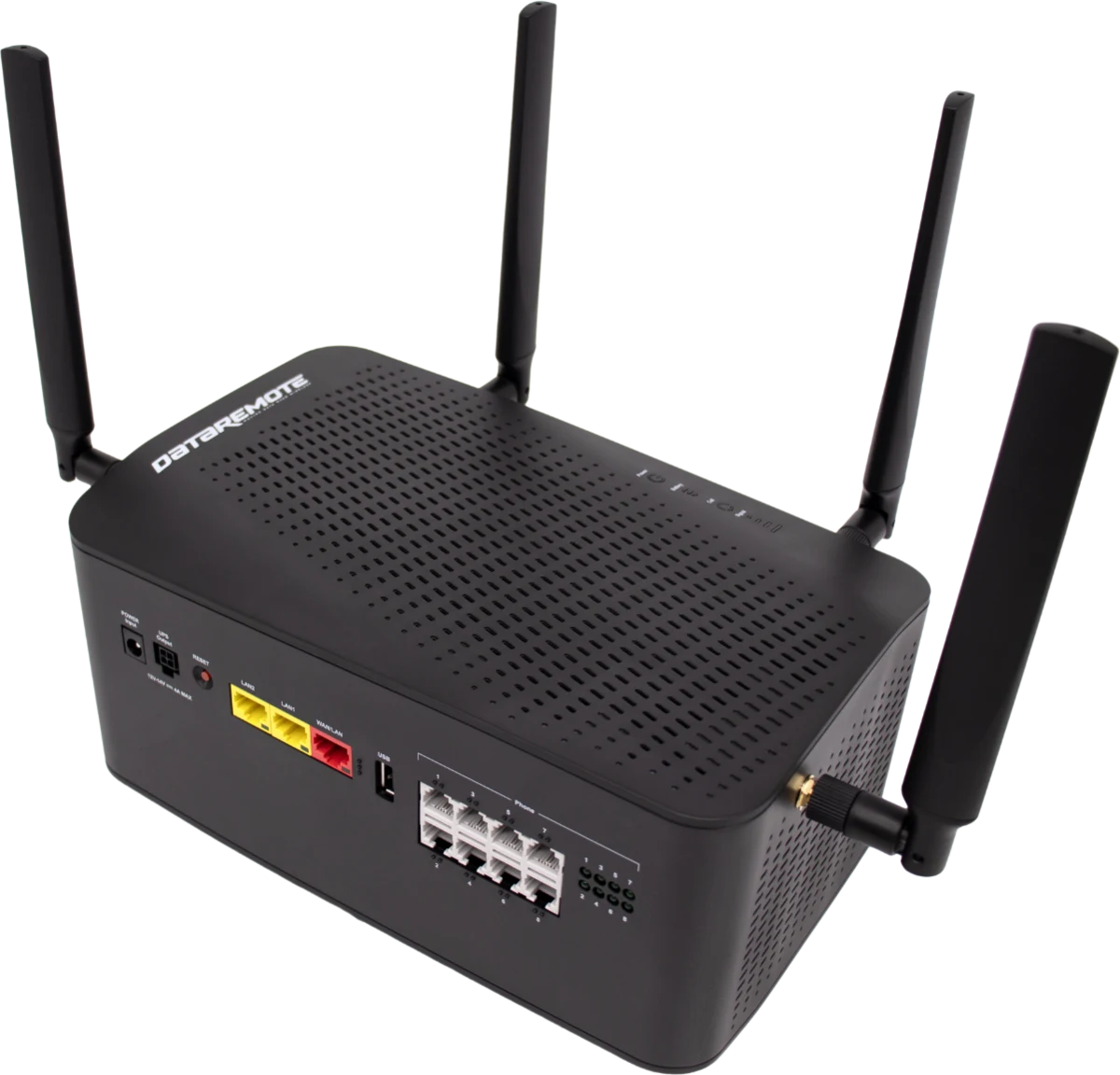
Eight analog lines on a 5G Sub-6 path with a 48-hour battery — the model we deploy when the site has 5G coverage and life-safety endpoints on the line.
- 8 FXS lines
- 5G Sub-6 (NSA + SA)
- 48 hr battery
- FCC grant held by DataRemote
What the unit actually does.
Six capabilities decide whether a line-replacement deployment works or generates tickets. Here is where the 90X1 stands on each.
- 01
Eight analog lines
Eight RJ-11 FXS ports with surge protection retire up to eight copper lines from one appliance — no per-line adapter, no separate ATA to power and monitor.
- 02
5G Sub-6, NSA and SA
A 5G Sub-6 radio carries the lines, with LTE fallback and approvals across Verizon, AT&T, T-Mobile, UScellular and Webbing.
- 03
Up to 48 hours of standby
An 18-cell 15Ah lithium-ion pack holds the site through a mains outage, and a 12VDC 3.0A UPS output powers approved connected devices from the same battery.
- 04
E911 with GNSS location
Integrated GNSS supplies the geo-location an emergency call needs once the line no longer maps to a fixed street address in the carrier database.
- 05
Line-grade analog behaviour
Ring-down, CPC, DTMF in and out of band and G.168 echo cancellation are what make a fire panel or elevator phone work on this path rather than merely connect to it.
- 06
Managed through Ara
Every unit we deploy enrols in Ara for remote provisioning, firmware, line-state alerts and syslog retrieval — most faults are diagnosed without a truck.
At a glance.
The POTS IN A BOX® platform terminates real analog lines on real FXS ports, then carries them over a managed cellular path with code-relevant battery backup. It is a purpose-built line-replacement platform, not a consumer cellular adapter with an RJ-11 jack on it.
Best fitSites with 5G coverage carrying fire, elevator or emergency endpoints.
Analog and network
- Analog lines
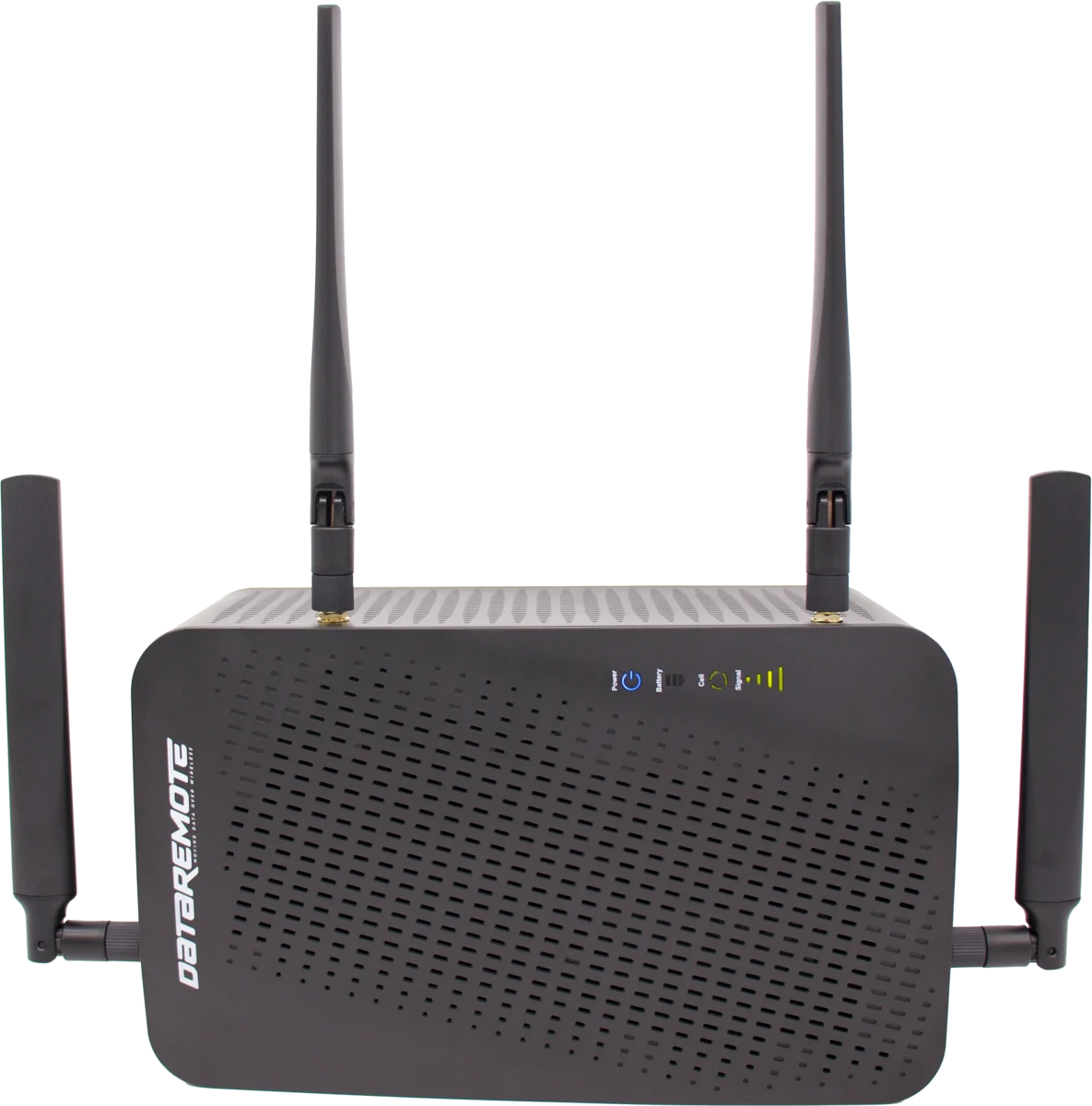
- 8 × RJ-11 FXS ports with surge protection
- Cellular
- 5G Sub-6 module, NSA and SA
- Ethernet
- 3 × RJ-45 — 1 × 2.5GbE WAN/LAN, 2 × 1GbE LAN
- SIM
- 2 × SIM (2FF)
- Antennas
- 4 × SMA (5G / LTE / GNSS)
- Other I/O
- USB Type-A
Power and backup
- Battery
- 18-cell 15Ah lithium-ion, up to 48 hr standby (runtime varies with load)
- DC input
- 19VDC 4A
- AC adapter
- 19V 3.3A
- UPS power output
- 12VDC 3.0A
- Shutdown
- Graceful shutdown with low-battery alert
The lines that come off copper.
These are the endpoints still hanging on a dial tone. Each one terminates on an FXS port and rides the managed cellular path instead.
- Elevator emergency phones
- Fire alarm panels
- Burglar and intrusion alarms
- Fax machines
- POS terminals and ATMs
- Emergency call boxes
- Gate entry and callbox systems
- M2M and SCADA links
- Telemetry and remote sensors
- Utility meter reading
It behaves like a line, because it is one.
Ring-down, CPC and echo cancellation are what make an elevator phone and a fire panel work on this path rather than merely connect to it.
- Ring-down (auto-dial)
- DTMF, in-band and out-of-band
- G.711 and G.729 codecs
- G.168 echo cancellation
- CPC (Calling Party Control)
- E911 with GNSS geo-location
- TTY / TRS support
- Caller ID and CWCID
- 3-way conference
- Hold, forward, transfer, waiting
The identifiers, in full.
Every number below is a real, verifiable listing. An AHJ will ask for them, so we publish them rather than describing the unit as "certified" and leaving you to find out.
| Standard | Identifier |
|---|---|
| UL 864 | Intertek report 105634656CHI-001 |
| UL 62368-1 | UL-CA-2329074-0 |
| UL 2054 | MH63085 |
| CSFM listing | 7305-2384:0002 |
| PTCRB | 122711, 118623 |
| FCC | 2AJLF-90X1Grant holder: DataRemote |
| CEC | California Energy Commission appliance listing |
The 90X1 is aligned with UL 864 and NFPA 72 requirements for fire alarm signal transmission. NFPA 72 is a code that applies to the installed system — it is not a product certification, and no device is "NFPA 72 certified." Whether a given installation satisfies it is determined by the authority having jurisdiction at the site.
Carrier approvals
- Verizon Open Development (2024-02-06)
- AT&T (2024-08-09)
- T-Mobile IoT
- UScellular
- Webbing
Network layer
The device credentials above cover the equipment. The service obligations — E911 address association and dispatchable location, 911-call notification to designated contacts, and Kari’s Law and RAY BAUM’S Act support — are met on the MIX Networks voice network that carries the line. See how the three layers fit together.
Managed remotely, through Ara.
Every unit we deploy is enrolled in Ara, DataRemote's cloud management platform, and monitored by our NOC. Line-state changes raise an alert before the customer notices, and most faults are diagnosed without a site visit.
Ara platform detail- Remote device access
- Reboot and firmware
- Parameter control
- Line-status monitoring
- No-reboot configuration
- Syslog retrieval
What buyers ask about the 90X1.
If the answer you need is not here, ask us directly — the line audit below is free and comes back within one business day.
- How many lines does one 90X1 replace?
- Eight. The unit provides eight RJ-11 FXS ports with surge protection, and each one presents as a normal analog line to whatever is plugged into it. The model number is not the line count — the 90X1 and 90X2 are both eight-line units.
- What happens when the power goes out?
- The internal 18-cell 15Ah lithium-ion battery is rated for up to 48 hours of standby, and real runtime depends on line activity and load. A 12VDC 3.0A UPS output can carry approved connected equipment from the same pack, and the unit sends a low-battery alert before shutting down gracefully.
- Can it carry fire alarm and elevator phone lines?
- That is the primary use case. The 90X1 is aligned with UL 864 and NFPA 72 requirements for fire alarm signal transmission and is listed by the California State Fire Marshal under 7305-2384:0002. NFPA 72 applies to the installed system rather than to a product, so whether a specific installation satisfies it is determined by the authority having jurisdiction at the site.
- How is 911 handled on a cellular line?
- Two layers. On the device, integrated GNSS supplies geo-location with the call. On the network, MIX Networks meets the service obligations — E911 address association and dispatchable location, 911-call notification to designated contacts, and Kari’s Law and RAY BAUM’S Act support.
- When would we choose the 90X2 instead?
- When the site has no usable 5G coverage, when FirstNet band 14 priority access matters, or when the location is in Canada — the 90X2 is the model approved on Bell. The line count, battery and management are otherwise identical.
Compare the alternatives.
- DataRemote · LTE
90X2
Sites without 5G, and anywhere FirstNet priority access matters.
View specs - DataRemote · Modular · 5G RedCap
90X5
Signal-difficult buildings — basements, interior cabinets, thick-wall construction.
View specs - DataRemote · Device management
Ara
Multi-site fleets where a truck roll costs more than the line does.
View specs
Get your free line audit.
Tell us about your sites and we'll come back with the right model, a deployment plan and pricing within one business day.
Form not loading? Open it in a new tab.