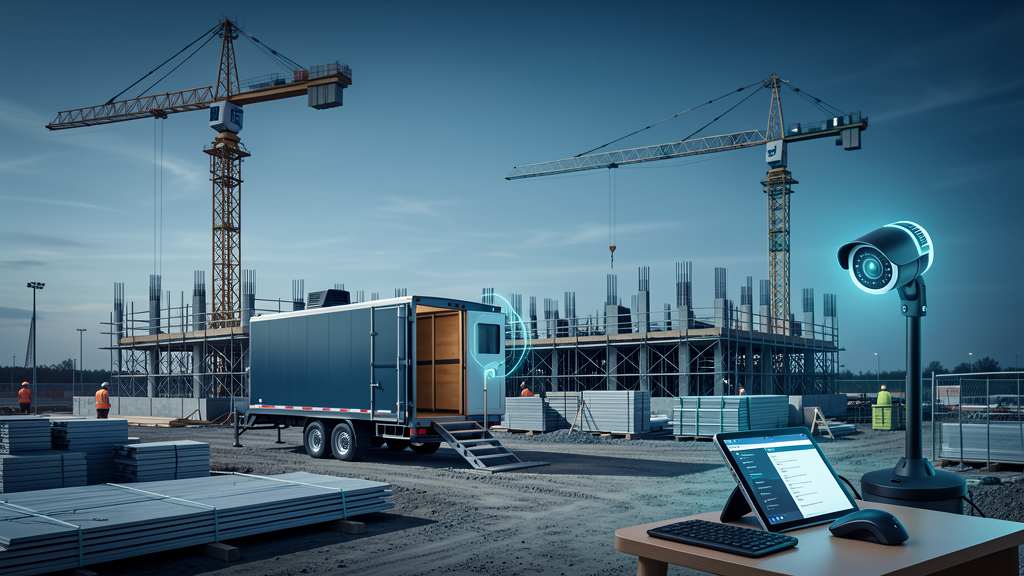
Construction sites run on connectivity now.
Plans are in the cloud. Cameras stream to owners. Supers approve changes from tablets. Crews clock in from mobile devices. Safety logs, deliveries, RFIs, and daily reporting all move faster when the site can stay online.
The problem is that many jobsites still treat internet service like a temporary convenience instead of core infrastructure. That is why so many projects start with weak trailer Wi-Fi, delayed installs, dead zones, and no backup plan.
If the job is supposed to run like a modern operation, the network needs to be planned like part of the job.
The Jobsite Is Supporting More Than a Trailer
A construction network is rarely just a few laptops anymore.
In most cases, it is supporting project managers, field engineers, office staff, VoIP phones, security cameras, access control, shared printers, guest access, drones, and cloud-based document systems. Add video calls with architects, ownership groups, or remote PMs, and a weak connection becomes a real operational drag.
That cost does not always show up as a line item called “telecom.” It shows up as slow approvals, failed uploads, poor camera visibility, and people wasting time doing work manually because the connection is unreliable.
The Biggest Mistake: Waiting Too Long for the Perfect Circuit
A common mistake is waiting on one wired circuit as if nothing can happen until it arrives.
Sometimes fiber is the right long-term answer. But construction schedules often move faster than carrier timelines. If the trailer is active next week and the fiber install takes 90 days, the site still needs to operate.
That is where phased connectivity works better.
Start with a rapid-deployment option such as 5G, LTE, or fixed wireless to get the site productive immediately. Then, if the project duration and bandwidth needs justify it, bring in a higher-capacity primary circuit later.
That approach is usually far more practical than waiting for an ideal setup while the project loses time.
What Good Jobsite Connectivity Actually Looks Like
The best construction-site networks are simple, resilient, and easy to support.
A clear primary connection. Depending on the site, that may be fixed wireless, fiber, or cable. The right answer depends on location, install timing, upload requirements, and how much camera or file-transfer traffic the site will carry.
A real failover path. Construction teams should not lose scheduling, reporting, and remote visibility because one carrier goes down. Cellular failover is often the cleanest safety net.
Coverage where work happens. Good service in the trailer is not enough if the gate, laydown yard, and field offices are dead zones. Many sites need outdoor access points or point-to-point wireless links, not just one indoor router.
Basic traffic separation. Office operations, cameras, guest access, and site systems should not all sit on one flat network. Segmentation helps with both performance and support as the site changes.
Cameras and Cloud Workflows Change the Bandwidth Picture
This is where many sites get caught off guard.
A project may think it only needs “basic internet” until live cameras, BIM files, drone uploads, and constant video calls hit the same connection. Then upload speed becomes just as important as download speed.
Before a service is ordered, teams should answer a few direct questions:
- How many cameras will be online?
- Are they streaming continuously?
- How large are the files being uploaded from the field?
- How many people will be on video calls at the same time?
- Does the owner expect reliable remote visibility into job progress?
If nobody is asking those questions early, the site is probably being undersized.
Support Matters as Much as the Circuit
Construction sites do not stay static. Trailers move. Fence lines change. New subs arrive. Camera placements shift. Temporary power issues create new network problems.
That is why the right partner is not just the vendor who can quote bandwidth. It is the one who can coordinate carriers, stage failover, adjust coverage, and keep the site working as conditions change.
A static telecom plan does not fit a moving jobsite.
The Bottom Line
The connected construction site is not about adding complexity. It is about removing friction.
When connectivity is done right, teams communicate faster, owners get better visibility, cloud tools actually help, and site operations stay moving. When it is done badly, every digital workflow gets harder.
If your current setup still depends on weak trailer Wi-Fi, late circuit installs, or no failover at all, there is a better way to build it.
If you need a practical jobsite connectivity plan for trailers, cameras, failover, and field operations, contact TrustedNetworx for a site-specific assessment.
About the author
Carter Dewey
Carter Dewey is CEO & Founder of TrustedNetworx, helping multi-site organizations navigate telecom modernization, POTS replacement, and AI-powered operations — translating complex infrastructure challenges into practical, phased migration roadmaps.