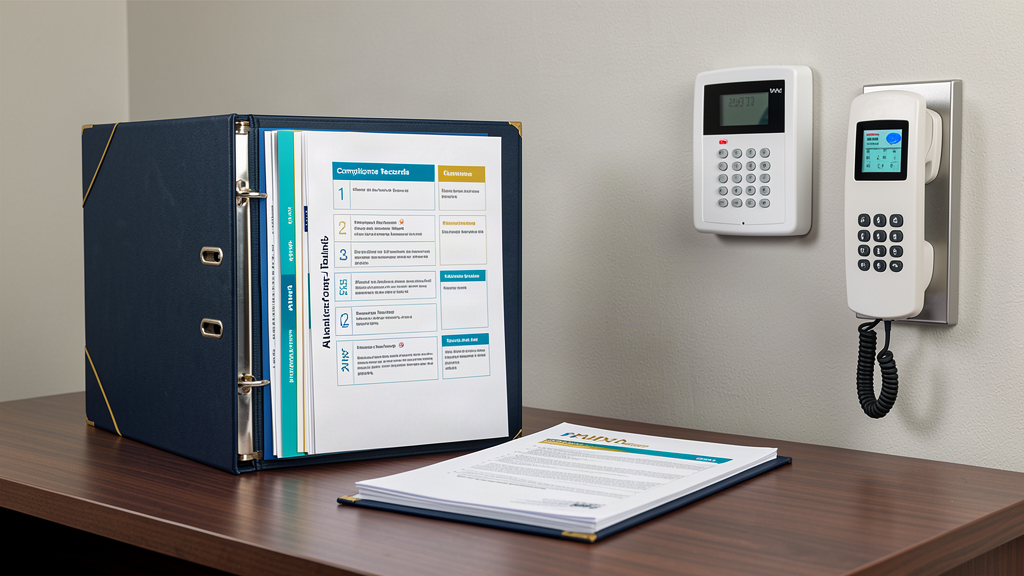
A multi-site compliance evidence file is the record set that proves, for every site, what equipment is installed, what it connects to, and when it was last tested. It is not the audit itself — it is what you hand over when an audit arrives. Build it one site at a time, give the whole portfolio a single owner, and update it whenever something on a site changes.
Treat this as a filing problem rather than a documentation problem. The test reports exist, the carrier notices exist, the photographs of the panel exist. They are simply spread across regional managers, inboxes and a shared drive nobody has opened since the last inspection. An evidence file is the index that turns those scattered artifacts into an answer.
What actually belongs in the file
For each site, a useful evidence file holds five things.
The equipment inventory. Not a purchase order — a live list of what is installed, where it sits, and what standard it is listed to. A fire alarm communicator, an elevator phone, a security panel and a line powering a pool call box are four different records with four different owners inside the same building.
The communications path. What each device dials, and what carries that path today. This is the record that tells you which sites are still riding copper, which is the first question a migration plan has to answer.
The test record. The date of the last successful test, who performed it, what the test proved, and what the result was. A test nobody wrote down is a test you cannot produce later.
The carrier paperwork. Retirement notices and their deadlines: route each one to whoever owns the file today, and log its deadline the day it surfaces.
The acceptance record. What the authority having jurisdiction asked for at the last sign-off, and what was provided. File it with the rest, so the next visit starts from the record rather than from a search.
The compliance audit checklist facility managers run covers what to inspect at a single building. The evidence file is the different half of the job: keeping the proof, once you have it.
One index for the portfolio, one named owner
Resist the folder-per-site start. A folder per site multiplies the maintenance without ever producing a portfolio view.
Build the opposite: a single index with one row per site and one column per artifact, so a missing test record shows up as a blank cell rather than a discovery during an inspection. The PDFs stay as attachments; the index is the document you actually maintain.
Then name one owner for the portfolio — not one per site, not the regional manager who happens to be closest. A single owner is what makes the index consistent, because the same person is comparing every site against the same list. Every site having its own keeper is how one building's records drift a year behind everyone else's.
Store it where three people can reach it: the auditor, whoever takes over the job from you, and the carrier. A file on somebody's laptop is not an evidence file.
Update it when something changes, not when the audit is scheduled
Documentation does not go stale slowly. It goes stale the afternoon something changes on site and nobody touches the record.
The triggers are short and predictable. A communicator swap. A panel replacement. A carrier retirement notice with a deadline on it. A phone line cutover. A change of building ownership or property manager. Any one of those invalidates part of the record set for that site, because the file now describes equipment that is no longer installed.
The fix is a rule rather than a reminder: close out the part of the record that changed in the same week as the change, while the technician still remembers what was tested. What an elevator phone inspection record has to prove is a good template for how narrow a single update should be — one device, one date, one result, one signature.
What an inspector actually asks for
Build the file to answer three questions, in order: what is installed, what has been tested recently, and who confirmed the test. A body of documentation that cannot answer those three in sequence is not usable during a site visit.
For fire alarm communications, the two records to hold are the path the signal travels and the most recent test result for that path. Keep the edition of the fire code your authority having jurisdiction enforces filed with the site, so the test record is read against the edition that governs the building.
Where a site is still on copper, the carrier's retirement obligations and the notice deadline come from the FCC's rules on network change disclosure — 47 CFR 51.333 is the section that governs what a carrier must give you and when.
Notice what all three have in common. The requirement sits with the standard or the carrier; producing the proof sits with you. That is the whole reason the file has to exist before anyone asks for it.
Keeping the file current across a portfolio
A portfolio-wide file needs a rhythm, not a project. Two habits carry it.
Review the index on a fixed cadence — quarterly for a portfolio with no open notices, monthly for any site with a carrier notice or a migration in flight. The review is short: walk the blank cells and chase them.
And keep the copper question visible, because it is the one change that arrives on someone else's schedule. The copper sunset risk assessment gives you a starting read on which sites still depend on lines that carriers are retiring, so the record set stays ahead of the notices instead of reacting to them.
The test of the file is plain: can you answer all three questions for every site without making a phone call?
If you want a second set of eyes on what your portfolio can and cannot prove today, tell us what your sites still run on — or start with the copper-dependent systems we replace and work backward to the records.
About the author
Carter Dewey
Carter Dewey is CEO & Founder of TrustedNetworx, helping multi-site organizations navigate telecom modernization, POTS replacement, and AI-powered operations — translating complex infrastructure challenges into practical, phased migration roadmaps.