Retail Connectivity: Keeping POS Systems Running Across Hundreds of Locations
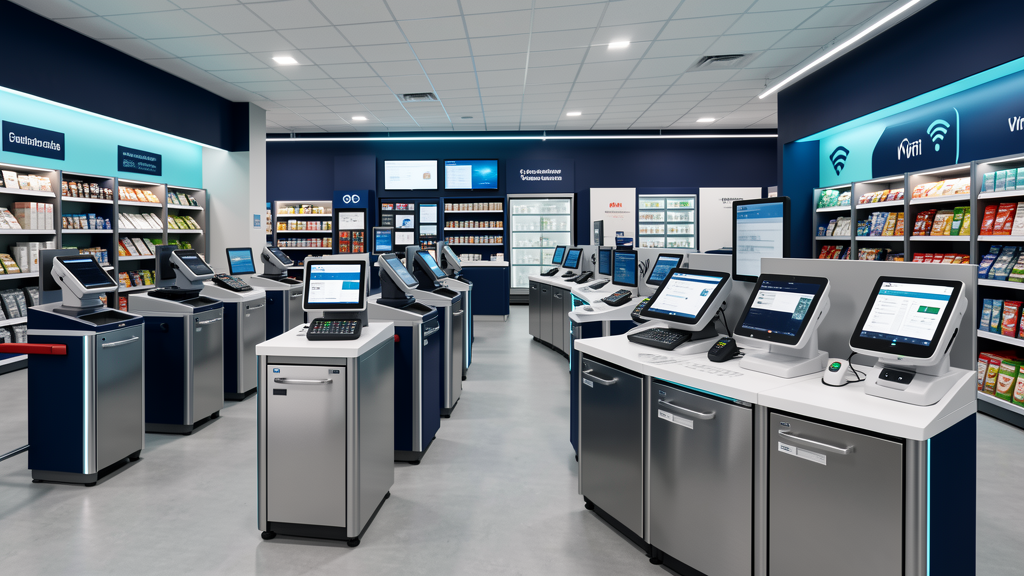
Retail operations break down quickly when connectivity gets shaky.
A register stalls. A card terminal times out. Buy online, pick up in store orders stop syncing. Store managers start hotspotting laptops just to keep basic workflows moving. At one location, that is frustrating. Across hundreds of stores, it becomes an expensive operating problem.
That is why retail connectivity cannot be treated like a basic utility purchase anymore. It is part of revenue protection.
Retail Depends on More Than the POS Terminal
A lot of teams still think about store connectivity as if it only matters at checkout.
In reality, the network is supporting POS, payment processing, inventory systems, digital signage, guest Wi-Fi, security cameras, back-office applications, handheld devices, vendor tablets, curbside workflows, and voice communications. In some environments it is also supporting smart lockers, self-checkout, and real-time reporting back to corporate.
When all of that rides on one undersized or poorly managed connection, the weak point shows up fast. Sometimes it looks like slow transactions. Sometimes it looks like inventory mismatches. Sometimes it looks like store associates standing around waiting for systems to come back.
The cost is not just technical. It hits labor, customer experience, and sales.
The Real Risk Is Store-to-Store Inconsistency
Multi-location retailers usually do not have one connectivity problem. They have fifty versions of it.
One store is on aging cable. Another is on a business fiber circuit with no backup. Another has a cheap all-in-one router that nobody has touched in three years. Another shares bandwidth between cameras, POS, and guest traffic with no real segmentation.
That patchwork is what makes outages harder to diagnose and more expensive to fix.
If every location is built differently, support becomes reactive. Troubleshooting takes longer. Carrier coordination gets messy. Reporting gets unreliable. And corporate has a harder time knowing whether they have a one-store issue or a pattern developing across a region.
Standardization matters more than most retailers think.
What Good Retail Connectivity Actually Looks Like
The goal is not to make every store complicated. The goal is to make every store predictable.
A strong retail connectivity design usually includes a few basics.
A right-sized primary connection. That might be fiber, cable, or fixed wireless depending on the market. The point is matching the service to the actual store workload instead of buying the cheapest circuit on paper.
Automatic failover. If the primary circuit drops, the store should not be waiting for staff to start improvising. LTE or 5G failover can keep payment traffic, essential cloud apps, and voice services alive long enough to avoid a full operational stop.
Traffic separation. POS and payment traffic should not be fighting with guest Wi-Fi, streaming devices, or camera uploads. Basic segmentation and policy controls matter.
Central visibility. IT and operations should be able to see which stores are degrading, which circuits are down, and which locations are hitting capacity before it turns into a customer issue.
This is where managed networking and SD-WAN often make sense. Not because they sound modern, but because they reduce chaos across the footprint.
Outages Do Not Need to Become Store Emergencies
Retail teams are already juggling staffing, shrink, supply chain issues, and customer service. They should not also be acting as the first line of network engineering.
When a store loses connectivity, the response should already be mapped out.
Can transactions continue on failover? Which applications are prioritized? Who gets alerted first? Is there one support path for carrier escalation, equipment issues, and site troubleshooting, or does the store manager have to start calling multiple vendors?
Those details matter. The difference between a minor disruption and a real revenue event is often the quality of the plan behind the circuit.
The Cheapest Circuit Is Often the Most Expensive Decision
This is one of the most common mistakes in retail telecom.
Procurement saves a little on monthly service, but the design ignores resiliency, visibility, or support. On paper, the store is connected. In practice, the business is accepting more downtime, slower incident response, and more operational friction.
That tradeoff usually looks fine until a regional carrier issue hits, a payment outage overlaps with peak hours, or a store spends half a day processing around network problems.
Connectivity should be evaluated against store uptime and transaction continuity, not just invoice totals.
The Bottom Line
Retail connectivity is not just about getting internet into a building. It is about keeping the store operational when the network is under pressure.
The retailers that handle this well standardize their design, build in failover, separate critical traffic, and make support simple. The ones that do not usually find out during a busy weekend, a payment issue, or a regional outage.
If you are managing dozens or hundreds of locations, the network should not be different at every address unless there is a very good reason.
A more consistent approach usually lowers disruption, improves support, and protects revenue at the store level.
If you want a practical plan for store connectivity, failover, and multi-site telecom support, contact TrustedNetworx for a location-by-location assessment.
Carter Dewey
Carter Dewey leads solution architecture at TrustedNetworx, helping multi-site organizations navigate telecom modernization, POTS replacement, and AI-powered operations. With deep experience across property management, senior living, hospitality, and healthcare, Carter translates complex infrastructure challenges into practical, phased migration roadmaps.