Hotel Connectivity: What Guests Expect in 2026
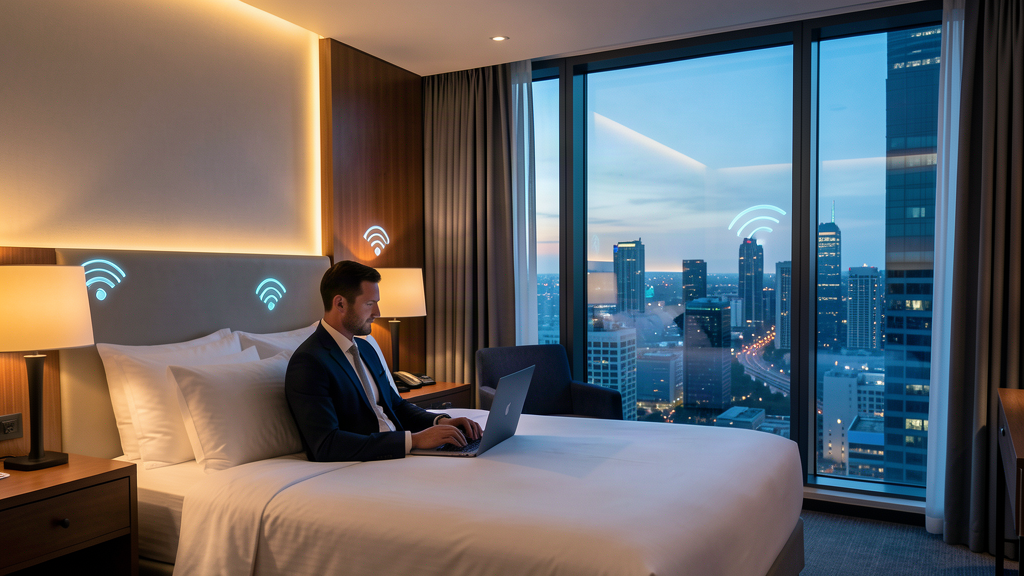
Hotel WiFi used to be a checkbox. You offered it. Guests used it. Nobody thought much about it.
That era is over.
In 2026, connectivity is the single most mentioned factor in negative hotel reviews — beating cleanliness, noise, and even bed comfort. It's not about whether the WiFi works. It's about whether the entire digital experience feels invisible.
Here's what guests actually expect today, and what it takes to deliver it.
The "Just Works" Standard
Guests don't think about bandwidth. They think about whether Netflix buffers, whether the smart TV responds to their phone's cast, and whether their video call with the home office drops mid-sentence.
The baseline expectation isn't "free WiFi." It's enterprise-grade connectivity that requires zero effort from the guest.
That means:
- No captive portal with a 12-digit room code from the front desk
- No re-authentication every 24 hours
- No 2 Mbps throttling on the "free" tier while the "premium" tier costs $14.99/night
Hotels still running on a single 100 Mbps cable connection shared across 120 rooms are already losing repeat business. Guests notice. They remember.
Bandwidth Per Room, Not Per Property
The old model — one circuit for the whole building — doesn't scale anymore.
A family of four checks in. Dad's on a Zoom call. Mom's streaming 4K. Both kids are gaming. That's 40-50 Mbps sustained, in one room. Multiply by 80 occupied rooms on a Tuesday night and you're not competing with the Hampton Inn down the street on thread count — you're competing on whether anyone's connection actually works.
The properties getting this right have moved to a per-room bandwidth model:
- Minimum 25 Mbps dedicated per guest room
- 100+ Mbps for suites and business floors
- Separate VLANs for guest traffic, back-of-house operations, and IoT devices
- Redundant circuits so a fiber cut doesn't take down the entire property
This isn't a technology problem. It's an operating budget problem — and it's one that shows up in TripAdvisor ratings within weeks of a guest's bad experience.
The Conference Room Has Its Own Rules
A hotel ballroom hosting 200 attendees with laptops open during a keynote needs fundamentally different connectivity than the guest floors above it.
Conference organizers now ask for dedicated circuits, static IPs, and SLA-backed uptime guarantees before they sign the contract. If your sales team can't answer those questions confidently, the RFP goes to the property that can.
Smart hotels are treating conference connectivity as a separate line item in the sales package — because it is a separate network design, and guests who book meeting space are evaluating it independently from room comfort.
The Smart Hotel Stack Needs a Backbone
Connected thermostats, smart locks, digital signage, IPTV, VoIP desk phones, occupancy sensors — all of these devices sit on the network. When the guest WiFi and the building automation share the same undersized pipe, everybody loses.
A hotel that promises keyless entry via an app loses trust instantly when the Bluetooth bridge drops offline because someone in room 312 is downloading a Steam library.
Network segmentation isn't optional anymore. Guest access, staff operations, and building automation need separate paths with managed failover.
The Real Cost of Cutting Corners
A 2025 J.D. Power study found that guests who experience connectivity issues are three times more likely to leave a negative review — and 40% less likely to rebook the same property.
If your hotel is running on a single cable modem connection with a consumer-grade mesh system, you're not saving money. You're losing revenue you can't track because guests silently decide to book elsewhere next time.
The fix isn't complicated. It's a managed connectivity partner who handles design, installation, monitoring, and failover. You get predictable monthly cost, guests get invisible connectivity, and your front desk stops fielding WiFi complaints.
What to Do Next
If you're managing a hotel property — or a portfolio of them — here's your Monday morning checklist:
- Ask your front desk how many WiFi complaints they handled last week. If the number is higher than zero on a regular basis, you have a problem.
- Run a speed test from a guest room on a Saturday night at 8 PM. Compare that to what your website promises.
- Check whether your conference sales team can answer basic connectivity questions without calling IT.
If any of those three items makes you uncomfortable, it's time for a real conversation about managed connectivity.
TrustedNetworx designs and manages multi-property hotel networks that guests don't think about — because they just work. If you're ready to stop competing on excuses, let's talk.
Carter Dewey
Carter Dewey leads solution architecture at TrustedNetworx, helping multi-site organizations navigate telecom modernization, POTS replacement, and AI-powered operations. With deep experience across property management, senior living, hospitality, and healthcare, Carter translates complex infrastructure challenges into practical, phased migration roadmaps.