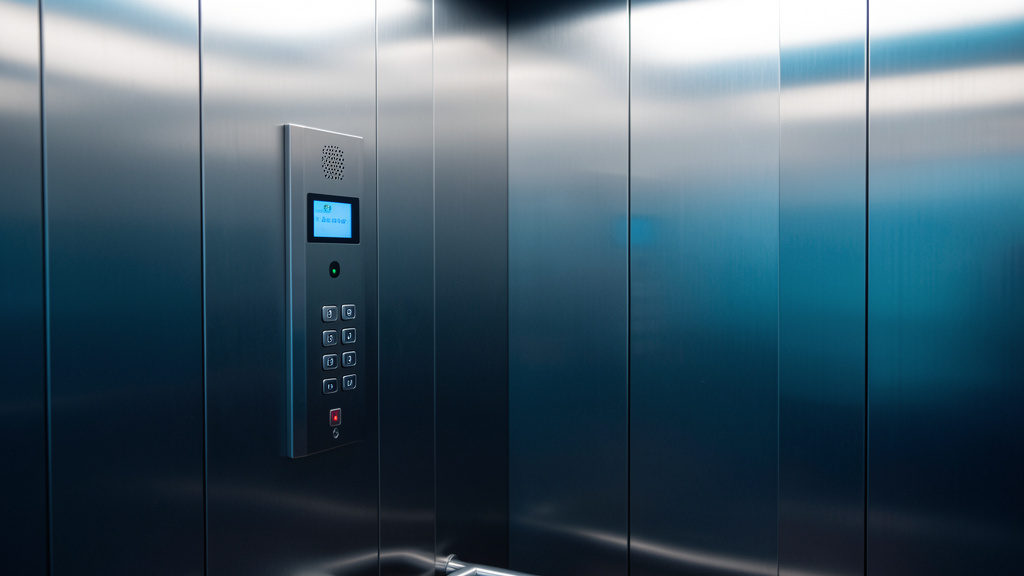
If you manage a commercial building, a hotel, a senior living facility, or really any property with an elevator, there's one compliance item that trips up more facility managers than just about anything else: the elevator emergency phone.
It's easy to overlook. You push the call button during a quarterly test, someone answers, you move on. But the requirements go far beyond "does it dial out." Here's what the codes actually say — and what you need to do about it.
The Three Codes That Matter
Three sets of requirements govern elevator phones, and they overlap in ways that confuse people. You need to satisfy all three.
ASME A17.1 / CSA B44 (Safety Code for Elevators and Escalators) — This is the big one. It requires a two-way communication means in every elevator car that connects to a location staffed 24/7 by authorized personnel who can take appropriate action. Not a voicemail box. Not a front desk that closes at 6 PM. Someone who can respond.
IBC 2021 Section 3001.2 — References A17.1 and adds that the communication system must be operational at all times, tested periodically, and clearly identified in the elevator cab.
ADA (Americans with Disabilities Act) — This layers on additional requirements around accessibility: the phone must be reachable from a wheelchair, operable without tight grasping or twisting, and must provide visual acknowledgment that the call has been received.
What "Staffed 24/7" Actually Means
This is where most facility managers get tripped up. A17.1 doesn't say "a phone that dials 911." It says a phone that connects to authorized personnel who are continuously available.
If your elevator phone rings at the front desk and the front desk goes home at 8 PM, you are out of compliance. Simple as that.
The fix is one of three things: route the call to a 24/7 monitoring center, route it to a security team that's always on-site, or contract with an alarm monitoring company that fields elevator calls specifically. Most of our clients go with a professional monitoring center — it's reliable, auditable, and costs a fraction of what you'd spend staffing your own desk around the clock.
POTS Lines Are Dying (And That's a Problem)
For decades, elevator phones ran on good old POTS lines — a dedicated copper pair from the telco. They were reliable. They worked during power outages. They were the gold standard.
Those days are over. Carriers are sunsetting copper at an accelerating pace. If your elevator phone still relies on a POTS line, you're living on borrowed time. And you probably already know it, because the line quality has been degrading for months.
The question isn't "should I replace my elevator POTS line." It's "what do I replace it with, and will it pass inspection?"
Your Replacement Options
Cellular (4G/5G) — A dedicated cellular communicator installed in the elevator machine room. No building wiring to worry about. Battery backup handles power outages. This is the most common path we recommend for most buildings. Make sure the unit is carrier-agnostic or at least on a network with solid coverage in your elevator shaft — signal penetration is the #1 gotcha.
VoIP with ATA — An Analog Telephone Adapter converts the elevator phone's analog signal to VoIP. Works if you already have a managed network, but be careful: your network switch needs battery backup, your internet connection needs to stay up during power outages, and the ATA itself needs to be monitored. More moving parts than cellular, but it keeps your existing phone hardware.
Satellite — Niche option for remote locations with no cellular coverage. Reliable, expensive, and usually overkill unless you're genuinely in the middle of nowhere.
What Inspectors Look For
When the elevator inspector shows up, they'll test the phone. They'll check for:
- Dial tone and connection — Does it actually place a call?
- Two-way voice quality — Can both parties hear each other clearly?
- 24/7 answer — Does someone pick up who can dispatch help?
- Location identification — Does the monitoring center know which elevator called?
- Power failure operation — Does the phone work when building power is out? (Battery backup requirement)
- ADA compliance — Visual call-received indicator, accessible height, operable controls
Fail any of these and you're looking at a red tag. In most jurisdictions, a red-tagged elevator means it's out of service until you fix it. That's not just an inconvenience — it's a liability and, in multi-story buildings, potentially an ADA violation of its own.
The Property Manager's Checklist
Here's what we walk our clients through:
- Verify your current elevator phone path. Where does the call actually go? Who answers at 3 AM on a Sunday?
- Test during off-hours, not just during the business day.
- If you're on POTS, start planning the migration now — before the carrier sends a disconnection notice.
- Document everything. The inspector will want to see test logs, maintenance records, and proof of 24/7 monitoring coverage.
- For multi-building portfolios, standardize. One monitoring provider across all properties means one point of accountability and volume pricing.
Don't Wait for the Inspection
Elevator phone compliance isn't hard. It's just specific. And the consequences of getting it wrong — a red-tagged elevator, an angry tenant, a potential liability claim — far outweigh the cost of doing it right.
If you're not sure whether your elevator phones meet current code, let's talk. We do compliance audits across entire property portfolios and can usually identify gaps in under an hour. No hard sell. Just clarity on where you stand.
About the author
Carter Dewey
Carter Dewey is CEO & Founder of TrustedNetworx, helping multi-site organizations navigate telecom modernization, POTS replacement, and AI-powered operations — translating complex infrastructure challenges into practical, phased migration roadmaps.