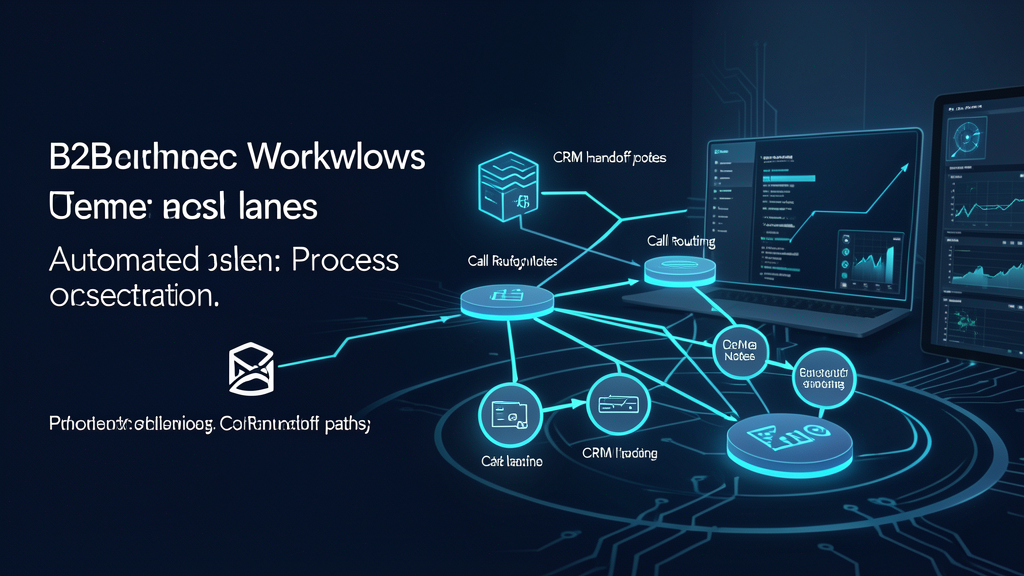
AI Isn't Magic — It's Workflows
The companies winning with AI aren't the ones chasing the latest model release or building the most ambitious demo. They're the ones that identified specific, repetitive workflows, deployed AI agents against them, and measured the results.
After working with dozens of telecom organizations on AI deployment, we've observed five patterns that consistently deliver. They aren't theoretical. They're operating in production — qualifying leads, routing tickets, following up on opportunities, monitoring infrastructure, and amplifying team knowledge. Here's how each one works, what you need to implement it, and the result you should expect.
Pattern 1: The Always-On Qualifier
What it is: An AI agent embedded on your website and in your inbound communication channels — email, chat, web forms — that qualifies every inquiry against your ideal customer profile. It asks the right follow-up questions, scores leads based on fit and urgency, and routes hot prospects immediately to your sales team.
How it works in plain language: When someone fills out a contact form or starts a chat, the AI agent doesn't just say "someone will get back to you." It engages. It asks about their needs, their timeline, their existing infrastructure. Based on the conversation, it either books a meeting directly, routes to the right salesperson with full context, or enters the lead into a nurture track with a clear reason why.
Real example: A property management company receiving hundreds of POTS migration inquiries needed triage. Their sales team was spending hours on initial qualification calls, many of which went nowhere. An AI qualifier now handles the first touch — asking about property count, line types, and timeline — and only passes leads that meet a minimum qualification threshold. Result: the sales team's time shifted from qualification to closing.
Timeline: Two to three weeks to configure with your qualification criteria and CRM integration.
Expected result: 30-50% reduction in time spent on unqualified leads, faster response to hot inquiries, and consistent qualification that doesn't degrade when volume spikes.
Pattern 2: The Triage Engine
What it is: An AI agent that sits at the intake point for all inbound communications — support tickets, partner inquiries, billing questions, vendor requests — and routes each one to the right person with the right context.
How it works in plain language: Most organizations have a routing problem, not a volume problem. The inquiry isn't hard to handle — it just went to the wrong inbox. The AI triage engine reads every inbound message, categorizes it, pulls relevant account or circuit data, and routes it to the correct team with a summary and suggested next step. No more "let me forward you to the right department."
Real example: A telecom provider handling carrier notifications, partner inquiries, and customer support through overlapping inboxes was losing time to manual routing. After deploying a triage AI, carrier SLA notifications route directly to NOC with the affected circuit highlighted. Partner commission inquiries go to finance with the partner account attached. Customer support tickets go to the right tier with full history. Average resolution time dropped by over 40%.
Timeline: Two to four weeks, depending on the number of routing categories and integration points.
Expected result: Elimination of manual routing labor, faster first response, and fewer tickets bouncing between teams before reaching the right owner.
Pattern 3: The Follow-Up Machine
What it is: An AI agent that manages multi-channel follow-up sequences — email, SMS — on a schedule that adapts based on prospect engagement.
How it works in plain language: Most leads die from neglect, not rejection. Someone expressed interest, the salesperson reached out once or twice, and then the thread went cold. The follow-up machine ensures that can't happen. It sends sequenced follow-ups across channels, adjusts timing based on whether the prospect opens, clicks, or replies, and escalates back to a human when the lead re-engages.
Real example: A mid-market telecom provider had a CRM full of "stale" leads — contacts that had inquired but never converted. They deployed a follow-up AI that re-engaged those leads with relevant content (POTS migration guides, connectivity assessments) over a multi-week sequence. Within 60 days, 8% of those "dead" leads re-engaged and entered active pipeline. Those were opportunities the team had written off.
Timeline: Two to three weeks, with the bulk of setup being sequence design and content preparation.
Expected result: Consistent, never-missed follow-up. Re-engagement of dormant leads. Sales team freed from calendar management.
Pattern 4: The Compliance Monitor
What it is: An AI agent that watches your telecom infrastructure landscape — tracking carrier notifications, regulatory deadlines, contract expirations, and copper sunset filings — and surfaces what needs attention before it becomes urgent.
How it works in plain language: Telecom compliance is a "needle in a haystack" problem. Important notifications arrive in inboxes alongside routine carrier updates, marketing emails, and general noise. The compliance AI monitors designated sources — carrier portals, regulatory feeds, contract databases — and flags action items. Instead of your team scanning for threats, the AI surfaces them.
Real example: A multi-state operator with 200+ locations was tracking copper sunset filings manually across several carriers. An AI compliance monitor now ingests carrier notifications and state PUC filings, flags anything affecting their locations, and creates a prioritized action list. Their team went from reactive catch-up to proactive planning.
Timeline: Three to four weeks, primarily for source integration and rule configuration.
Expected result: Fewer missed deadlines, earlier visibility into service changes, and reduced compliance risk across the portfolio.
Pattern 5: The Knowledge Amplifier
What it is: An AI agent trained on your organization's specific knowledge — product catalog, pricing, carrier relationships, compliance requirements, standard operating procedures — that gives your team instant answers instead of hours spent digging through documents.
How it works in plain language: Most telecom organizations have the knowledge they need — it's just scattered across Sharepoint folders, email threads, PDF contracts, and people's heads. The knowledge amplifier ingests that content and makes it queryable. A sales rep can ask about a specific carrier's SLA terms and get an answer in seconds. A support agent can pull up a customer's contract provisions during a call without putting the caller on hold.
Real example: A telecom consultancy with a large base of carrier contracts and compliance documents deployed a knowledge AI for their consulting team. Instead of searching through contract folders before client calls, consultants ask the AI about specific clauses, pricing tiers, or service terms. Prep time for client calls dropped by an estimated 25%.
Timeline: Two to four weeks for initial content ingestion and testing. Knowledge quality improves as the AI gets more usage and feedback.
Expected result: Faster team onboarding, reduced time spent searching for information, and more consistent answers to client and internal questions.
Where to Start
You don't implement all five patterns at once. Pick the workflow where volume and repetition are highest — that's where the ROI is most immediate. For most telecom organizations, the Always-On Qualifier or the Triage Engine delivers the fastest payback.
The key is starting. The AI capabilities are ready. The question is whether your workflows are.
Want to see how these patterns apply to your operations? Explore TrustedNetworx AI Workforce solutions — we'll assess your highest-volume workflows and show you exactly what deployment looks like, with timelines and ROI projections specific to your business.
About the author
Carter Dewey
Carter Dewey is CEO & Founder of TrustedNetworx, helping multi-site organizations navigate telecom modernization, POTS replacement, and AI-powered operations — translating complex infrastructure challenges into practical, phased migration roadmaps.